
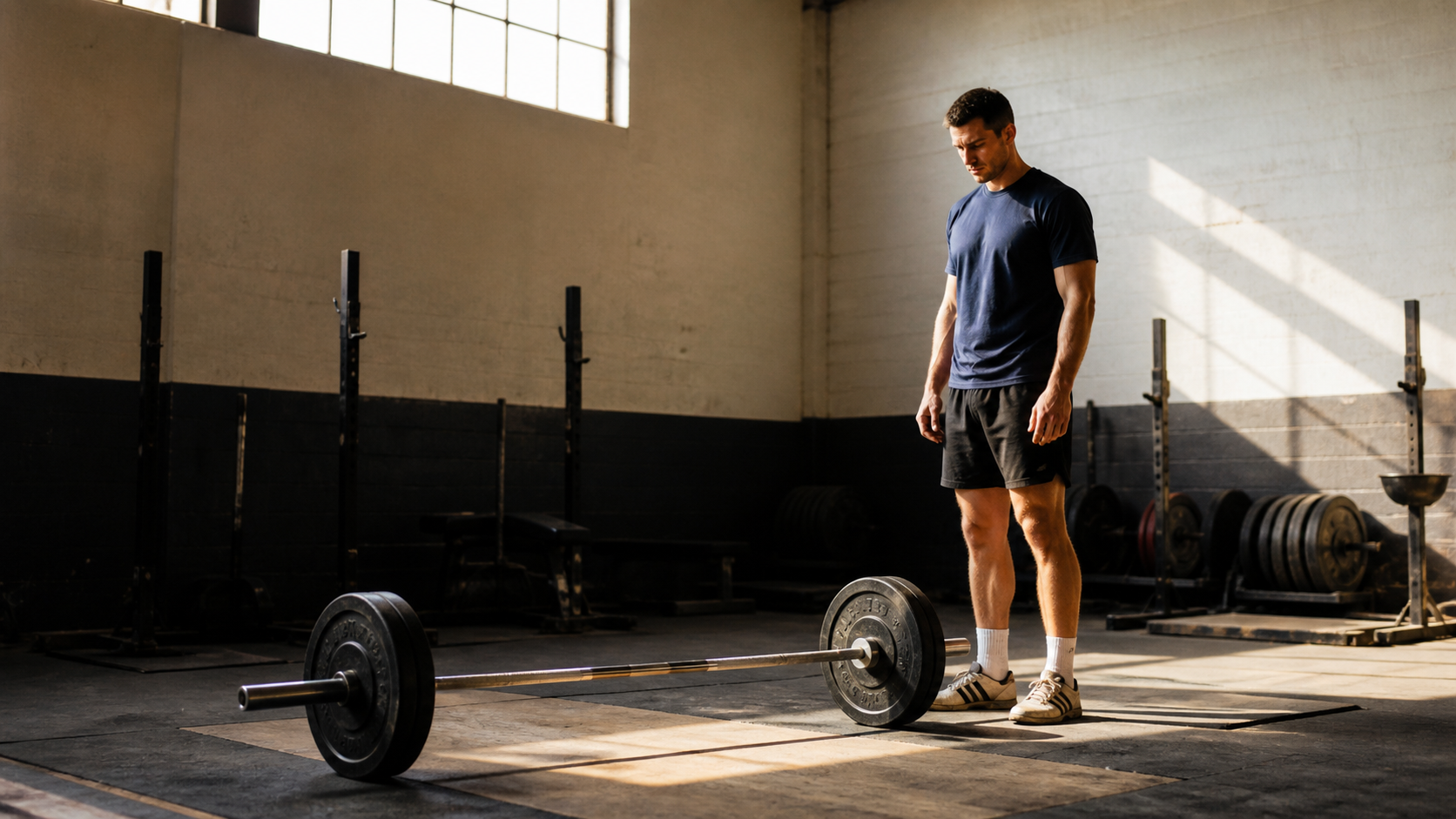
The weight moved cleanly a month ago, but now the same bar seems welded to the floor. The natural reaction is to train harder, add sets, or test your max again—choices that can deepen the fatigue hiding your progress. A lifting plateau is a problem to diagnose, not a challenge to out-suffer. Start by confirming the stall, matching training to the goal, and changing one variable at a time.
First, Make Sure It Is a Real Lifting Plateau
A genuine plateau is repeated lack of progress under comparable conditions, not one disappointing workout. Sleep, equipment, technique, range of motion, rest periods, and accumulated fatigue can change what you lift that day. Acute sleep loss can also reduce performance without erasing long-term adaptation [9].
Before rewriting your program, compare several exposures to the same lift. Record load, repetitions, sets, estimated repetitions in reserve, body mass, sleep, pain, and major endurance work. Keep equipment and technique consistent. No validated number of failed sessions defines a plateau, but a trend tells you more than one max attempt [2], [9].
Progress also slows with experience. A trained lifter should not expect a beginner’s rapid pace to continue indefinitely [1]–[4]. Sometimes your expectations, rather than your adaptation, no longer fit your training age.
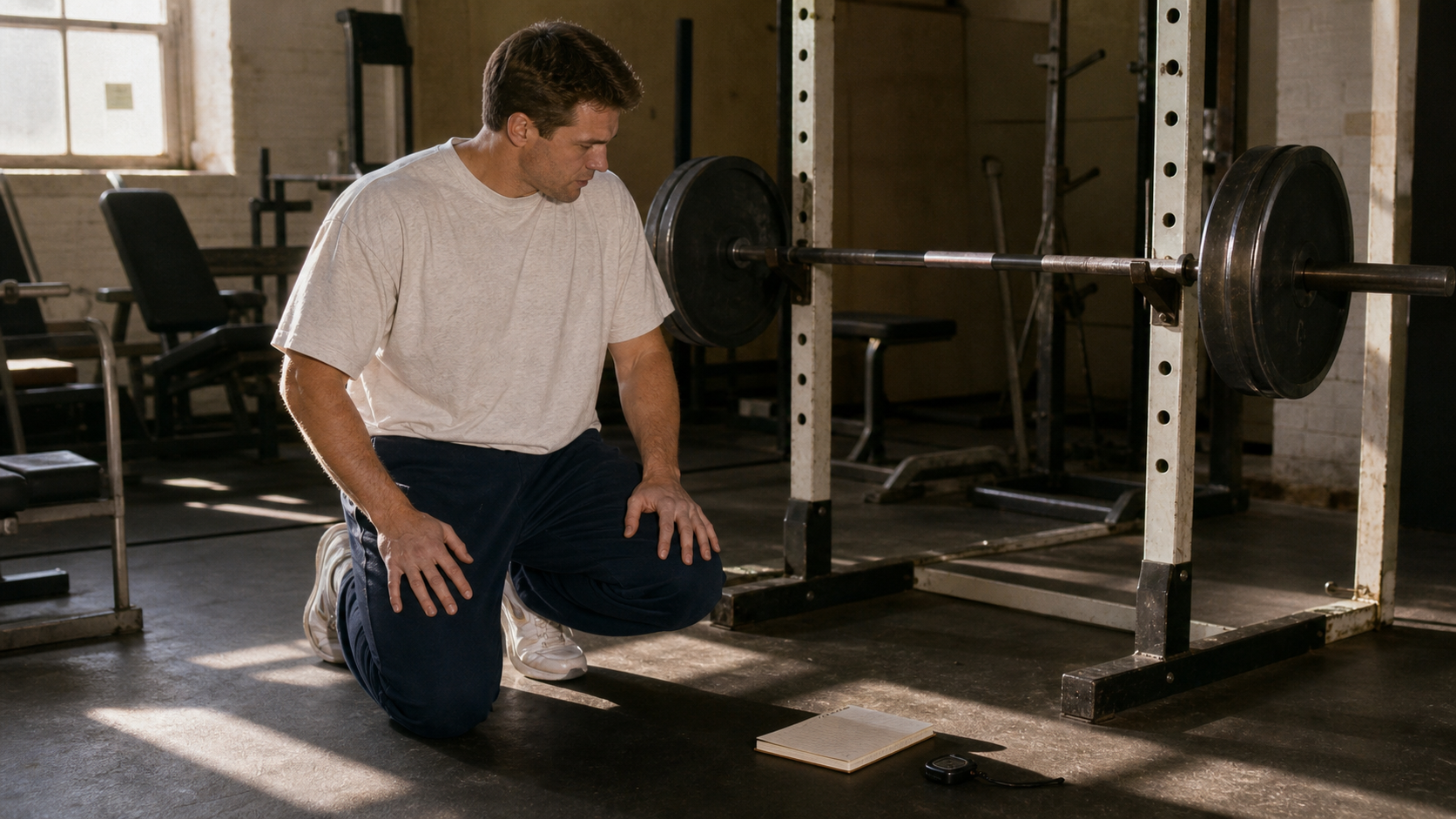
Match the Training Stimulus to the Number You Want to Raise
For a bigger one-repetition maximum, heavy and specific practice is the strongest-supported adjustment. Muscle can grow across many loads, but maximal strength is partly a skill. Practice producing high force with technique and range of motion that resemble the test.
Evidence reviews find that moderate and heavy loads improve 1RM more than predominantly light-load training. Loads above roughly 80% of 1RM tend to rank highest for maximal-strength development [1], [2], [4]. This means regular, technically sound work with the lift or a close variation—not daily maxes.
This distinction explains a common frustration: your legs or chest may be growing while your squat or bench max barely changes. Hypertrophy and 1RM strength overlap, but they are not identical outcomes. High-repetition work can remain useful for building muscle, while heavier work teaches you to express that capacity under a heavy bar [1], [2], [4].
More Sets Can Help, but More Fatigue Is Not the Goal
Multiple-set programs generally perform well, so an inadequate dose can slow progress [1], [2]. Yet volume has no universal sweet spot. Even one hard set of 6–12 repetitions, two or three times weekly, produced significant but suboptimal squat and bench gains in trained men over 8–12 weeks [7]. Useful volume depends on the lifter, exercise, and recovery.
Add volume only when current work is well tolerated and the quality of training remains high. If extra sets coincide with falling repetitions, slower bar speed, worse motivation, or irritated joints, the added work may be reducing the stimulus-to-fatigue ratio.
Higher frequency has no clear strength advantage when useful volume is comparable [6]. An extra day can still spread sets across the week, protect their quality, and provide technical practice. It is a scheduling tool, not an independent cure.
Periodized programs that organize load and volume outperform constant programs on average, but no single model has proved best [3]. Planned variation should preserve progression and specificity; random exercise changes are not a substitute.
You Do Not Need to Train Every Set to Failure
Grinding to failure can feel like proof that a workout was productive. For strength, however, failure training has not shown a meaningful advantage over stopping beforehand [5]. Strength gains have occurred across a wide range of estimated repetitions in reserve, although the evidence does not identify one perfect RIR target for every exercise and lifter [8].
Failure adds acute fatigue and can reduce later-set quality. On heavy squats, presses, and deadlifts, finish hard sets while execution remains sound. Use failure selectively on safer accessories or to calibrate effort. Research is clearer that failure is unnecessary than it is about an ideal distance from failure [5], [8].
When Recovery Is Hiding Your Strength
Fitness and fatigue can rise together. A short reduction in volume or maximal-effort work can reveal strength built during a demanding block. Exact deload prescriptions for recreational lifters remain uncertain, so use a deload as a diagnostic and fatigue-management tool—not a replacement for better programming [12].
Sleep deserves similar nuance. Across 69 publications, acute sleep loss reduced exercise performance on average, but individual results varied widely [9]. A short or disrupted night can make today’s load feel heavier; it does not prove that you have lost muscle or developed chronic overtraining. When possible, move an important test rather than forcing it after abnormal sleep.
Dieting is more likely to restrict muscle gain than to explain every stalled max. In controlled resistance-training studies lasting at least three weeks, energy deficits impaired lean-mass gains, while average strength gains were statistically comparable with non-deficit conditions [10]. If adding muscle is a priority, a prolonged large deficit works against that goal. But a stalled 1RM during a diet still requires the same broader check of specificity, fatigue, and test conditions.
Does Cardio Cause a Strength Plateau?
Usually, cardio and maximal-strength progress can coexist. An updated analysis of 43 studies found no significant overall disadvantage for maximal strength or whole-muscle hypertrophy when aerobic and resistance training were combined [11]. Explosive strength showed a small reduction, especially when both modes occurred in the same session, and some men may experience lower-body interference with demanding endurance volumes.
Manage fatigue instead of removing cardio automatically. If lower-body strength or power is the priority, separate demanding aerobic work from key lifting sessions when practical and monitor performance. No universal cardio limit or required separation interval is established [11].
A Practical Plan to Restart Progress
For recreational lifters with a repeated, pain-free stall, use a controlled process:
- Standardize the comparison. Review several sessions with the same lift, technique, equipment, and rest periods.
- Choose the outcome. If 1RM is the target, add appropriate heavy, lift-specific practice rather than only more light repetitions [1], [2], [4].
- Change one variable. Adjust load emphasis, productive sets, specificity, or weekly distribution for a defined block.
- Keep compound work shy of failure. Preserve technique and later-set quality instead of making every session a test [5], [8].
- Reduce workload if fatigue signs cluster. Persistent soreness, unusually high effort, declining bar speed, and poor motivation make a short deload reasonable [12].
- Reassess under normal conditions. Judge the change after comparable sessions, not after poor sleep or an unusually demanding endurance workout.
No step guarantees a new personal record. These changes improve the odds that training supplies a useful, specific stimulus without burying it under avoidable fatigue. New or worsening pain, neurological symptoms, dizziness, chest symptoms, or an abrupt unexplained performance decline are reasons to stop maximal attempts and seek qualified assessment.
Conclusion
The best response to a lifting plateau is rarely to add everything at once. Confirm that the stall is real, accept that progress slows with experience, and make training more specific to the number you want to improve. Add volume only when recovery and set quality support it, use frequency to distribute work, and keep failure selective. A calmer, measured adjustment is more informative—and often more productive—than another week of forced maxes.
Sources
- American College of Sports Medicine Position Stand. Resistance Training Prescription for Muscle Function, Hypertrophy, and Physical Performance in Healthy Adults: An Overview of Reviews. Medicine & Science in Sports & Exercise, 2026. Direct link. DOI: 10.1249/MSS.0000000000003897. PMID: 41843416.
- Resistance training prescription for muscle strength and hypertrophy in healthy adults: a systematic review and Bayesian network meta-analysis. British Journal of Sports Medicine, 2023. Direct link. PMID: 37414459.
- Comparison of Periodized and Non-Periodized Resistance Training on Maximal Strength: A Meta-Analysis. Sports Medicine, 2017. Direct link. DOI: 10.1007/s40279-017-0734-y. PMID: 28497285.
- Resistance Training Load Effects on Muscle Hypertrophy and Strength Gain: Systematic Review and Network Meta-analysis. Medicine & Science in Sports & Exercise, 2021. Direct link. DOI: 10.1249/MSS.0000000000002585. PMID: 33433148.
- Effects of resistance training performed to repetition failure or non-failure on muscular strength and hypertrophy: A systematic review and meta-analysis. Journal of Sport and Health Science, 2022. Direct link. DOI: 10.1016/j.jshs.2021.01.007. PMID: 33497853.
- Effects of Variations in Resistance Training Frequency on Strength Development in Well-Trained Populations and Implications for In-Season Athlete Training: A Systematic Review and Meta-analysis. Sports Medicine, 2021. Direct link. DOI: 10.1007/s40279-021-01460-7. PMID: 33886099.
- The Minimum Effective Training Dose Required to Increase 1RM Strength in Resistance-Trained Men: A Systematic Review and Meta-Analysis. Sports Medicine, 2020. Direct link. DOI: 10.1007/s40279-019-01236-0. PMID: 31797219.
- Exploring the Dose-Response Relationship Between Estimated Resistance Training Proximity to Failure, Strength Gain, and Muscle Hypertrophy: A Series of Meta-Regressions. Sports Medicine, 2024. Direct link. DOI: 10.1007/s40279-024-02069-2. PMID: 38970765.
- Effects of Acute Sleep Loss on Physical Performance: A Systematic and Meta-Analytical Review. Sports Medicine, 2022. Direct link. DOI: 10.1007/s40279-022-01706-y. PMID: 35708888.
- Energy deficiency impairs resistance training gains in lean mass but not strength: A meta-analysis and meta-regression. Scandinavian Journal of Medicine & Science in Sports, 2022. Direct link. DOI: 10.1111/sms.14075. PMID: 34623696.
- Compatibility of Concurrent Aerobic and Strength Training for Skeletal Muscle Size and Function: An Updated Systematic Review and Meta-Analysis. Sports Medicine, 2022. Direct link. PMID: 34757594.
- Tapering and Peaking Maximal Strength for Powerlifting Performance: A Review. Sports, 2020. Direct link. DOI: 10.3390/sports8090125. PMID: 32917000.