
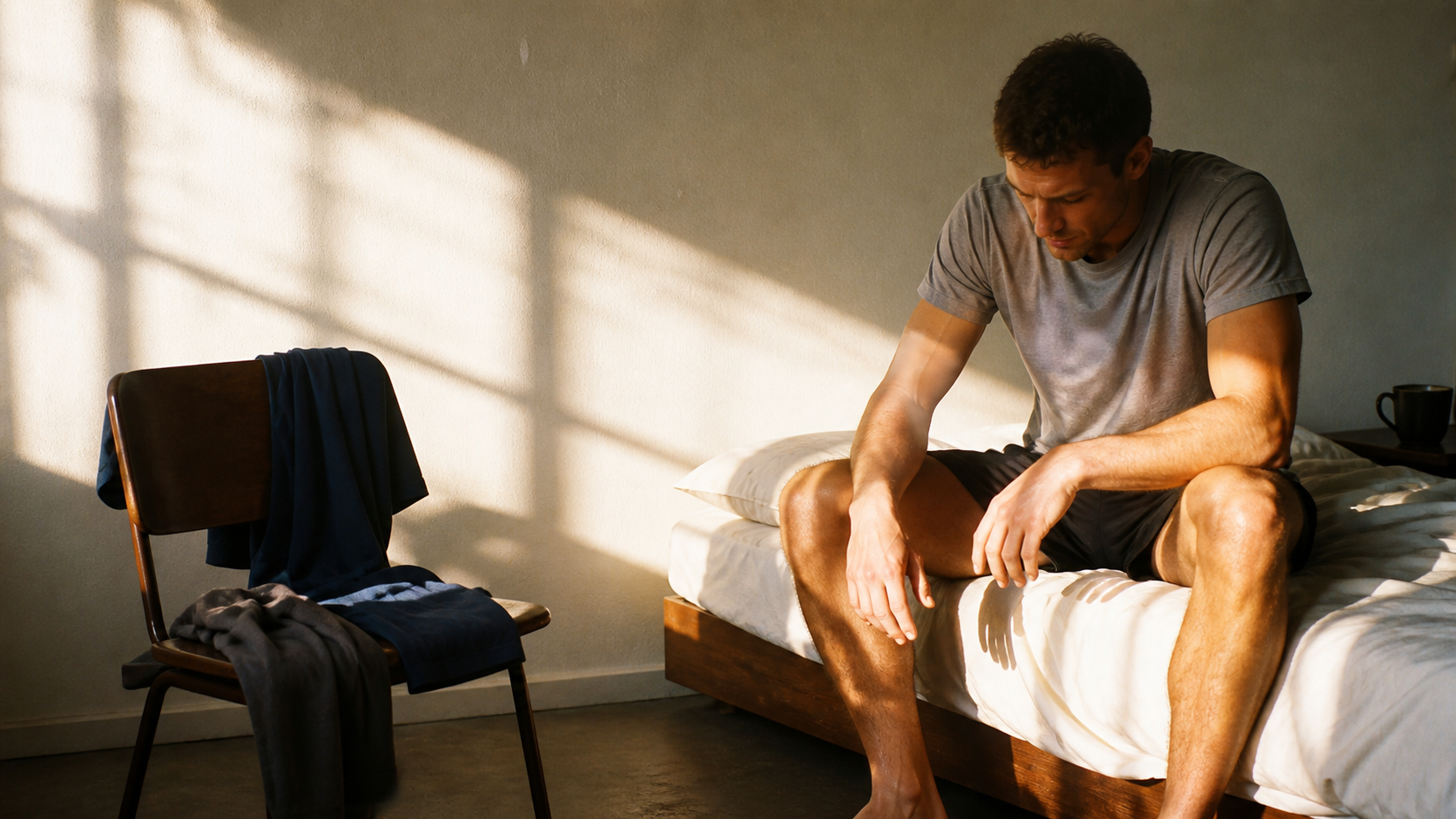
A bad night can make the next workout feel unusually heavy, and a stressful week can leave recovery looking worse on every tracker. It is tempting to blame the whole experience on low testosterone or high cortisol. Yet the evidence on sleep deprivation, stress, and male hormones is more nuanced. Distinguishing a temporary shift from a persistent problem helps you make better training decisions without turning every rough session into an endocrine crisis.
Do sleep deprivation and stress harm male hormones?
Severe sleep deprivation can temporarily lower testosterone, but ordinary short sleep does not cause a consistent or predictably large reduction. Acute stress may even raise gonadal hormones briefly, while cortisol responses vary with timing and measurement. For most recreational trainees, impaired alertness, performance, fueling, and recovery matter more than any single hormone reading. [1], [4], [8]
The practical consequences are clearer than the simple hormone story: protect training quality now and avoid persistent mismatches among life stress, workload, food, and recovery.
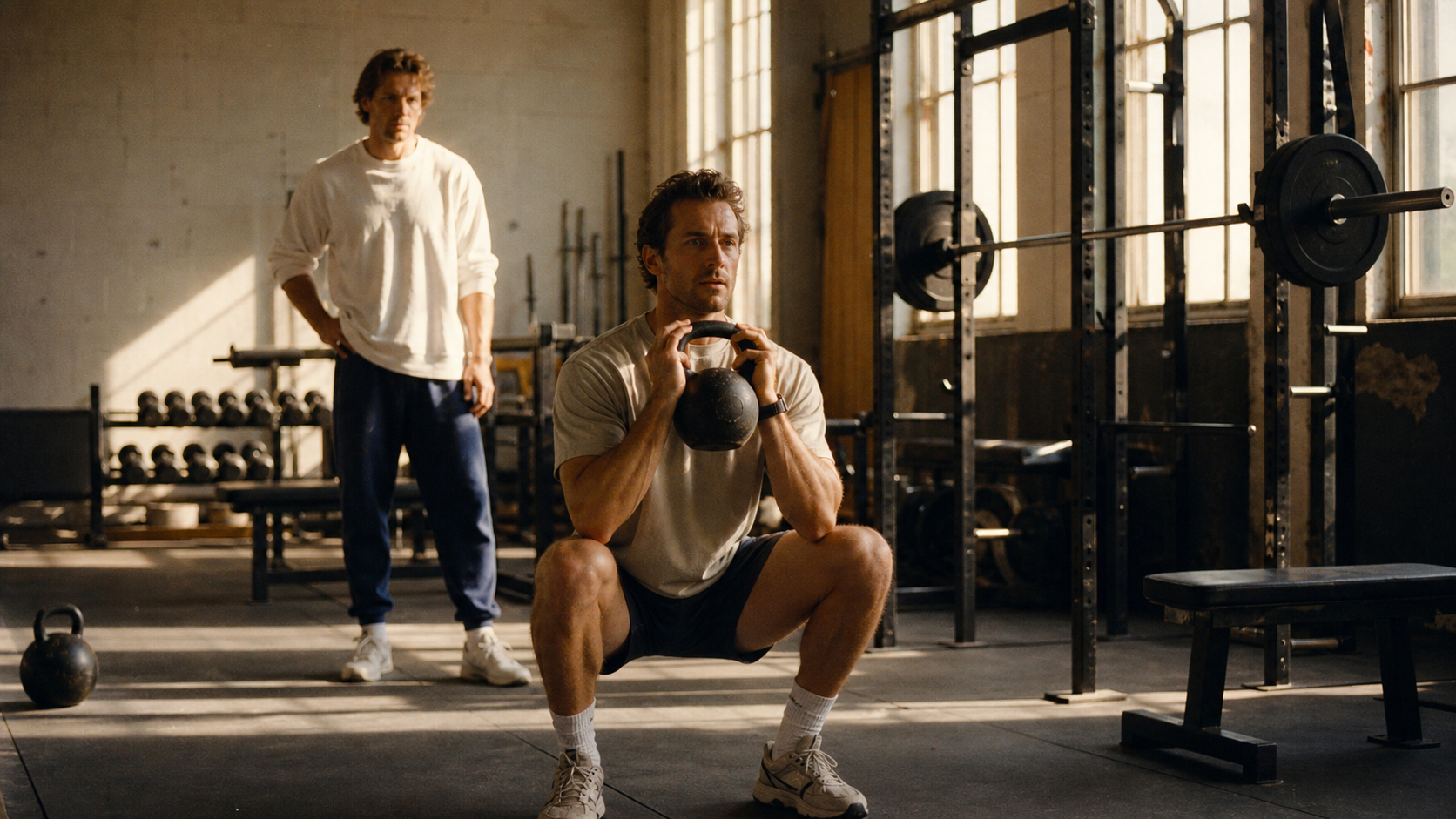
How sleep deprivation affects testosterone
The clearest effect appears after total sleep deprivation. A meta-analysis of 18 small studies involving 252 healthy men found that staying awake for at least 24 hours produced a moderate reduction in serum testosterone. Short-term partial sleep restriction, however, did not produce a statistically significant pooled effect. [1]
One sleepless night and a week of slightly shortened sleep are not interchangeable. Studies also differ in sleep timing, blood collection, assay method, age, and food intake. Because testosterone follows a daily rhythm, sampling time can influence the result.
Several short nights do not automatically create clinically meaningful androgen deficiency. For more detail, see [how sleep affects testosterone levels in men](/how-sleep-affects-testosterone-levels-in-men/).
Cortisol, muscle recovery, and performance
The popular “low testosterone, high cortisol” model is too tidy. A 2024 review of 24 studies found no significant overall cortisol increase after acute sleep deprivation. Modest increases in serum and repeated-measure subgroups showed the importance of collection method and timing. [4]
An all-nighter still matters. In a crossover experiment with 13 young adults, one night without sleep reduced post-meal muscle protein synthesis by 18% the next day; testosterone fell and cortisol rose. This small mixed-sex study measured one acute exposure, not long-term muscle growth. [5]
Performance evidence is more useful for the next session. Across 69 publications, acute sleep loss reduced physical performance by 7.6% on average, but wide variation makes that a poor individual forecast. Effects were more apparent with total deprivation, late restriction, afternoon testing, and longer endurance work. A separate review found a moderate adverse effect on endurance, especially beyond 30 minutes. [6], [7]
So after a very poor night, judge readiness through alertness, coordination, perceived effort, and actual performance. If technique feels unreliable, move the session earlier, reduce the load, avoid maximal attempts, or postpone technically risky work. Sleep is only one part of recovery; the balance between [sleep and training-program design](/what-matters-more-for-progress-sleep-or-the-perfect-program/) also shapes how consistently you can progress.
Psychological stress is not the same as hormone damage
Acute psychological stress does not reliably suppress testosterone. A meta-analysis of 21 laboratory studies involving 881 participants found that gonadal steroids tended to rise immediately after standardized stress, though the studies were highly varied and were not limited to recreationally active men. [8]
Exercise itself can also produce short-lived changes in testosterone and cortisol. These responses depend on the activity, intensity, duration, sampling time, and measurement method. They do not reliably predict later strength or hypertrophy, so a dramatic post-workout hormone graph does not tell you whether a program is working. [9]
Chronic stress can still interfere through worse sleep, inconsistent meals, lower concentration, altered appetite, alcohol use, and poor-quality sessions. These effects matter even without demonstrated testosterone suppression. Protect the behaviors that keep training recoverable instead of chasing one cortisol reading.
The same caution applies to overtraining. A review of 38 studies found that basal hormones were usually normal in athletes classified as overreached or overtrained, while cortisol and catecholamine results conflicted. A joint sports-medicine consensus concluded that no single hormonal, biochemical, immune, psychological, or performance marker can diagnose overtraining syndrome. [10], [11]
For recreational trainees, persistent performance decline alongside fatigue, mood change, disturbed sleep, soreness, illness, or altered food intake is more informative than a ratio.
When hormonal disruption becomes more concerning
The better-established long-term endocrine threat is sustained low energy availability: consistently eating too little for the energy demanded by training and everyday life. Male Athlete Triad and IOC REDs consensus statements link this state with suppression of the reproductive hormone axis, lower testosterone, impaired bone health, and poorer performance. The evidence comes mainly from competitive, endurance, weight-class, and physique athletes, so the exact risk and thresholds cannot simply be transferred to every gym-goer. [12], [14]
Risk becomes more plausible when aggressive dieting overlaps with rising training volume. Persistent fatigue, falling performance, low libido, recurrent injury, or excessive weight loss should prompt a review of food and workload. The broader factors in [what really affects testosterone](/what-really-affects-testosterone/) are more useful than blaming stress alone.
Sleep-disordered breathing is another reason not to reduce everything to lifestyle stress. Obstructive sleep apnea is associated with lower testosterone, particularly when severe, but observational evidence cannot prove that apnea caused the hormonal difference. Meta-analysis has also not shown that CPAP reliably raises testosterone. Loud snoring, witnessed breathing pauses, and marked daytime sleepiness are reasons to seek sleep assessment, not reasons to self-treat with hormone products. [16], [17]

Practical decisions for training and recovery
Use sleep and stress information to adjust the situation, not to diagnose yourself:
- After one poor night, manage immediate risk. Keep training submaximal if attention, coordination, or technique is impaired. Avoid using stimulants to conceal dangerous sleepiness during lifting, endurance work, driving, or equipment use.
- During a stressful period, simplify if needed. Preserve regular meals and realistic sleep. Temporarily reducing complexity or load may protect adherence, but it is not guaranteed to raise testosterone.
- During a cut, watch the combination of signals. Falling body weight, rising fatigue, reduced libido, recurring injury, and worsening performance together deserve more attention than any isolated marker.
- Do not manage training with home hormone panels. Track performance, perceived effort, motivation, soreness, illness, sleep, and body-weight trend. Several indicators deteriorating persistently provide a better reason to adjust the plan than one testosterone-to-cortisol ratio. [10], [11]
When to get testosterone tested
One low result after poor sleep, illness, hard training, or under-fueling does not establish hypogonadism. Guidance requires compatible symptoms and consistently low testosterone, confirmed with a repeat morning fasting measurement using an accurate assay. [15]
Seek qualified medical assessment for sustained low libido, changes in erections, unexplained fatigue, loss of strength or muscle, fertility concerns, repeated bone injury, or repeatedly low testosterone. Evaluation may need to consider energy deficiency, medications, obesity, systemic illness, and sleep apnea. Do not self-prescribe testosterone or “boosters”; exogenous testosterone can suppress fertility and requires individualized monitoring.
Conclusion
Sleep deprivation and stress can affect male hormones, but the size and meaning of those changes depend on severity, duration, timing, and the wider recovery context. Total sleep deprivation can lower testosterone acutely, while partial sleep loss and everyday stress produce inconsistent hormonal effects. For most men, the useful response is to protect sleep, adjust unsafe sessions, fuel the workload, and watch persistent symptom patterns—not chase isolated cortisol or testosterone numbers.
Sources
- “Effect of partial and total sleep deprivation on serum testosterone in healthy males: a systematic review and meta-analysis.” Sleep Medicine. 2021. https://pubmed.ncbi.nlm.nih.gov/34801825/ DOI: 10.1016/j.sleep.2021.10.031. PMID: 34801825.
- “The effect of acute sleep deprivation on cortisol level: a systematic review and meta-analysis.” Endocrine Journal. 2024. https://pubmed.ncbi.nlm.nih.gov/38777757/ DOI: 10.1507/endocrj.EJ23-0714. PMID: 38777757.
- “The effect of acute sleep deprivation on skeletal muscle protein synthesis and the hormonal environment.” Physiological Reports. 2021. https://pubmed.ncbi.nlm.nih.gov/33400856/ DOI: 10.14814/phy2.14660. PMID: 33400856.
- “Effects of Acute Sleep Loss on Physical Performance: A Systematic and Meta-Analytical Review.” Sports Medicine. 2022. https://pubmed.ncbi.nlm.nih.gov/35708888/ DOI: 10.1007/s40279-022-01706-y. PMID: 35708888.
- “How much does sleep deprivation impair endurance performance? A systematic review and meta-analysis.” European Journal of Sport Science. 2023. https://pubmed.ncbi.nlm.nih.gov/36472094/ DOI: 10.1080/17461391.2022.2155583. PMID: 36472094.
- “Gonads under stress: A systematic review and meta-analysis on the effects of acute psychosocial stress on gonadal steroids secretion in humans.” Psychoneuroendocrinology. 2024. https://pubmed.ncbi.nlm.nih.gov/38471257/ DOI: 10.1016/j.psyneuen.2024.107004. PMID: 38471257.
- “Exercise-induced responses in salivary testosterone, cortisol, and their ratios in men: a meta-analysis.” Sports Medicine. 2015. https://pubmed.ncbi.nlm.nih.gov/25655373/ DOI: 10.1007/s40279-015-0306-y. PMID: 25655373.
- “Hormonal aspects of overtraining syndrome: a systematic review.” BMC Sports Science, Medicine and Rehabilitation. 2017. https://pubmed.ncbi.nlm.nih.gov/28785411/ DOI: 10.1186/s13102-017-0079-8. PMID: 28785411.
- “Prevention, diagnosis, and treatment of the overtraining syndrome: joint consensus statement of the European College of Sport Science and the American College of Sports Medicine.” Medicine & Science in Sports & Exercise. 2013. https://pubmed.ncbi.nlm.nih.gov/23247672/ DOI: 10.1249/MSS.0b013e318279a10a. PMID: 23247672.
- “2023 International Olympic Committee’s (IOC) consensus statement on Relative Energy Deficiency in Sport (REDs).” British Journal of Sports Medicine. 2023. https://bjsm.bmj.com/content/57/17/1073 DOI: 10.1136/bjsports-2023-106994.
- “The Male Athlete Triad—A Consensus Statement From the Female and Male Athlete Triad Coalition Part II: Diagnosis, Treatment, and Return-To-Play.” Clinical Journal of Sport Medicine. 2021. https://pubmed.ncbi.nlm.nih.gov/34091538/ DOI: 10.1097/JSM.0000000000000948. PMID: 34091538.
- “Testosterone Therapy in Men With Hypogonadism: An Endocrine Society Clinical Practice Guideline.” The Journal of Clinical Endocrinology & Metabolism / Endocrine Society. 2018. https://www.endocrine.org/clinical-practice-guidelines/testosterone-therapy DOI: 10.1210/jc.2018-00229. PMID: 29562364.
- “Association between obstructive sleep apnea and male serum testosterone: A systematic review and meta-analysis.” Andrology. 2022. https://pubmed.ncbi.nlm.nih.gov/34536053/ DOI: 10.1111/andr.13111. PMID: 34536053.
- “Effects of CPAP on Testosterone Levels in Patients With Obstructive Sleep Apnea: A Meta-Analysis Study.” Frontiers in Endocrinology. 2019. https://pubmed.ncbi.nlm.nih.gov/31496991/ DOI: 10.3389/fendo.2019.00551. PMID: 31496991.