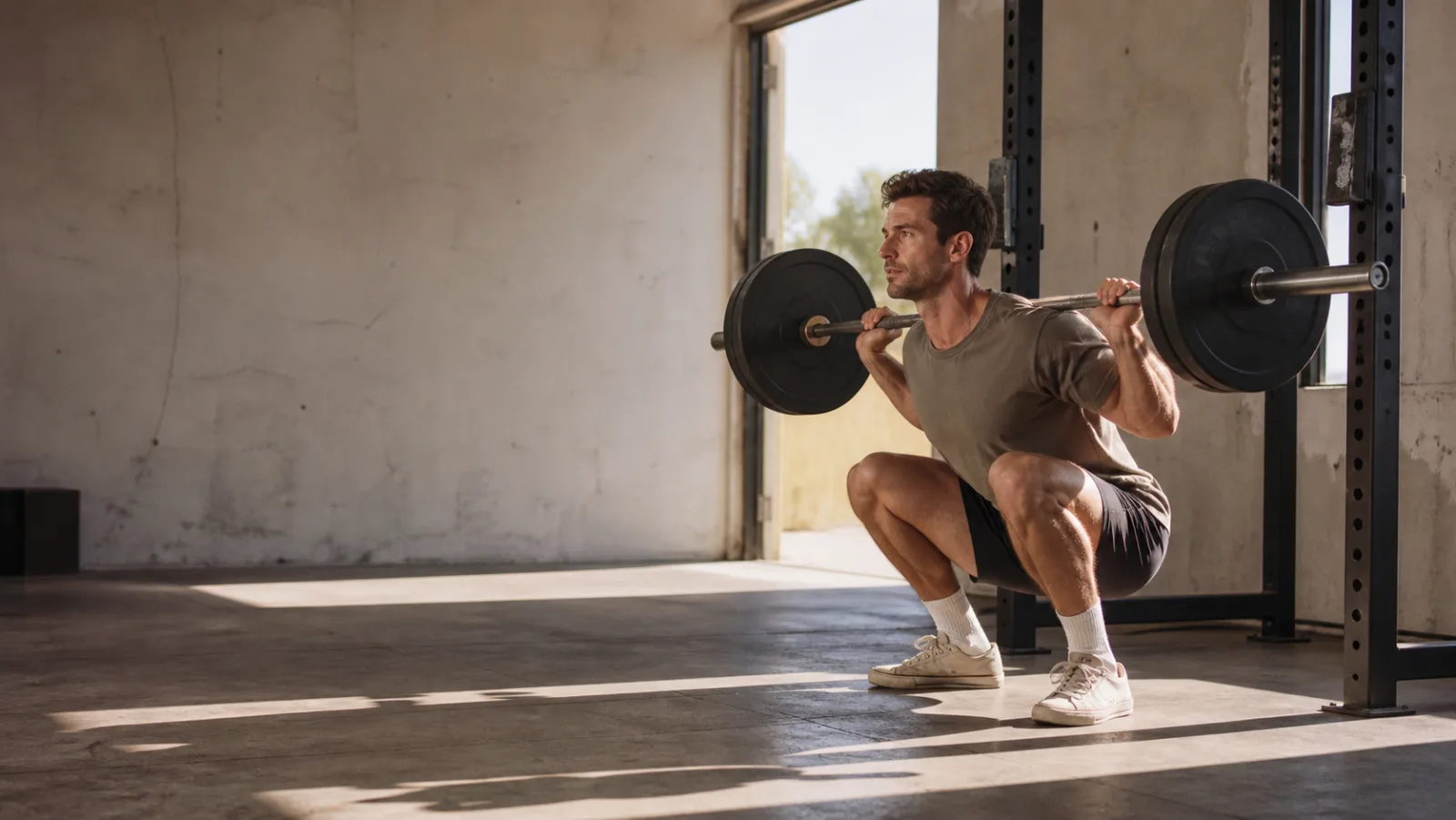
You finish a set of squats, feel your knees working, and wonder whether that pressure is a warning sign. It is a reasonable concern, especially when heavier weights or deeper reps make the exercise feel more demanding. But for people with healthy knees, current evidence does not show that properly dosed squats routinely cause damage. The important questions are not whether squats are universally “good” or “bad,” but how depth, load, training history, and symptoms change the dose your knees receive.
Are Squats Bad for Your Knees if They Are Healthy?
For a pain-free recreational trainee, squats are not inherently harmful to the knees. A 2024 scoping review examined 15 studies on deep squatting; 14 reported no negative effect on knee-joint health, while the lone study linking deep squats with injury was a case study. An earlier review covering more than 164 biomechanical and related papers also found no persuasive evidence that deep squats are intrinsically degenerative when the movement is learned and loading is progressed appropriately. [1], [2]
That conclusion is reassuring, but not a guarantee that every squat is safe for every person. Studies use different populations, techniques, and depths, and large randomized trials following recreational lifters for decades do not exist. Healthy knees generally tolerate squatting, but the way you train still matters. [1], [2]
This fits a broader view of resistance exercise: loading is something the body can adapt to, not automatically a form of damage. Squats are one option within strength training and its wider health effects, although their specific value depends on your goals and how well the movement suits you.
Knee Pressure During Squats Is Not the Same as Damage
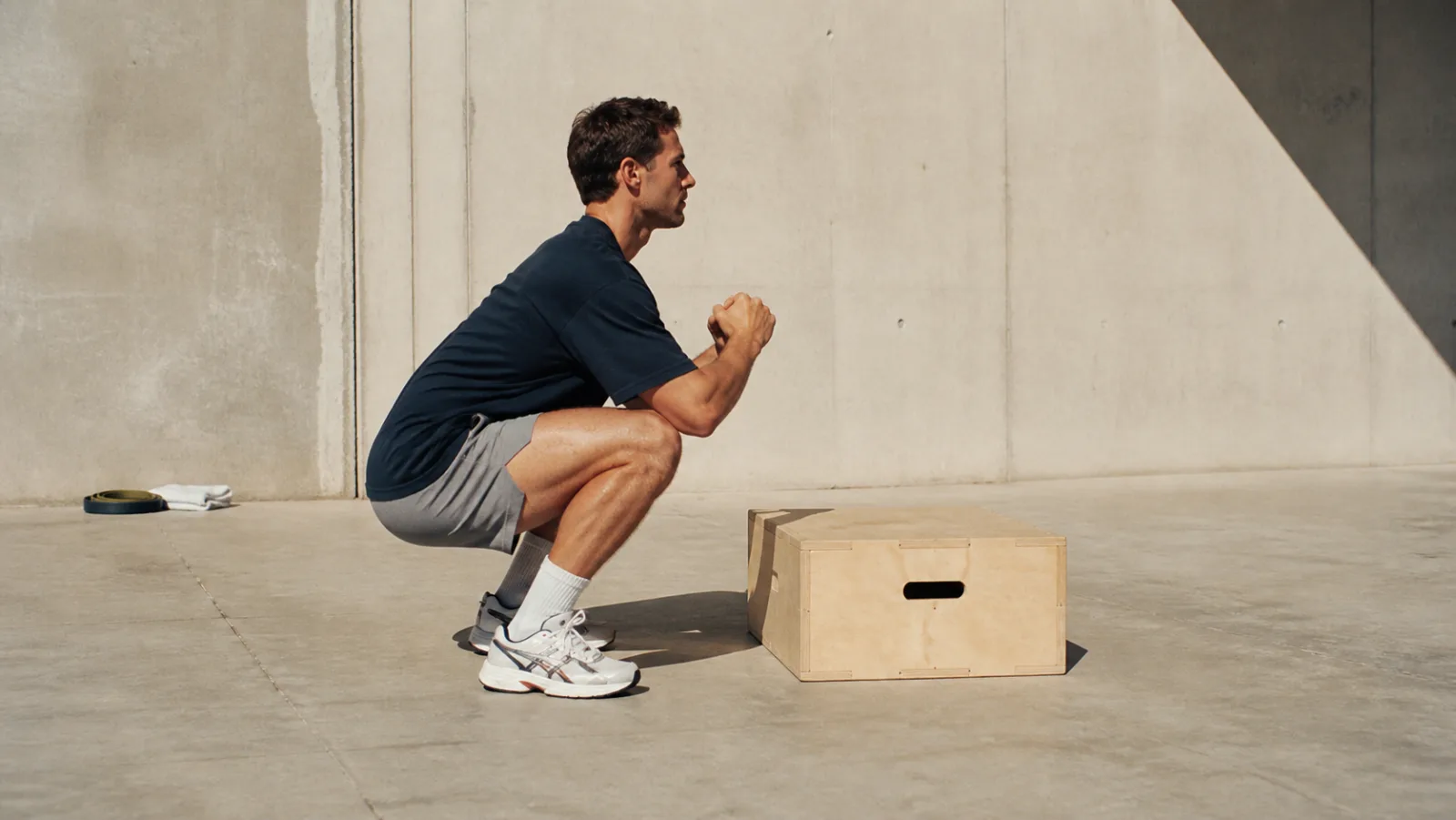
Squats place substantial force through the knee. In laboratory studies, adding weight and increasing knee flexion often raise knee-extensor demand, patellofemoral reaction force, or modeled stress around the kneecap. [4], [5]
In one study of 15 healthy adults, patellofemoral force and modeled stress increased as the knee approached 90 degrees of flexion, and both were higher when participants held an external load equal to 35% of body weight. Another study in experienced female lifters compared unloaded squats with squats at 50% and 85% of the one-repetition maximum for each depth. Heavier loads increased patellofemoral loading, and below-parallel squats produced the highest modeled stress within a given loading condition. [4], [5]
These findings describe acute biomechanics, not cartilage wearing away, pain developing, or injury occurring months later. A modeled force estimate cannot identify a universal damage threshold. Reviews considering longer-term knee health do not find a consistent harmful effect from deep squatting. [1], [2], [4], [5]
Training is meant to expose tissues to stress. The goal is a dose you can recover from and adapt to, not eliminating all joint force.
Are Deep Squats Worse Than Partial Squats?
The evidence does not show that deep squats are generally more dangerous for healthy, resistance-trained people. Greater depth can increase patellofemoral loading in some conditions, but depth is only one part of the equation. The external weight, technique, fatigue, weekly volume, and individual anatomy all affect what the knee experiences. [1], [2], [4], [5]
Partial squats are not automatically safer. A shorter range of motion may allow a lifter to use substantially more weight, changing the total demand on the knee and the rest of the body. Deep squats are not mandatory either. There is no evidence-based cutoff angle that every recreational trainee must reach—or avoid. [1], [2]
A useful rule is to treat depth as a programming variable. Use the deepest range you can control and tolerate for your training goal. If you are adding depth, avoid simultaneously making a large jump in weight and hard-set volume. When progress stalls, looking at why lifting numbers stop increasing can be more useful than forcing heavier repetitions through a range you no longer control.
What to Do if Squats Hurt Your Knees
Pain changes the decision, but does not by itself prove damage or identify the cause. Patellofemoral pain, osteoarthritis, recent injury, and postoperative restrictions are different situations.
For patellofemoral pain—pain around or behind the kneecap—clinical guidance recommends combining hip- and knee-targeted exercise with education and load management. Resisted squats are specifically listed as one possible knee-targeted exercise. That means a squat can be part of rehabilitation, not that one depth, weight, frequency, or acceptable pain level works for everyone. [7]
In practice, a more tolerable variation may involve reducing the external load, shortening the range temporarily, changing the exercise, or reducing the number of hard repetitions. These adjustments can lower acute patellofemoral demand, but no study can promise that one modification will prevent future injury. [4], [5], [7]
Persistent, worsening, or function-limiting pain deserves assessment by a qualified clinician. The same applies when you are returning after a diagnosed injury or surgery. General evidence about squat safety cannot override restrictions tied to a specific condition.
Squats and Knee Osteoarthritis
Knee osteoarthritis does not automatically rule out resistance training. A meta-analysis of 46 randomized trials involving 4,289 adults aged 50 or older found that resistance training produced moderate average improvements in symptoms, physical function, and lower-limb strength compared with inactive controls. These programs varied and were not all based on squats, so the result supports individualized resistance exercise rather than a universal squat prescription. [8]
Structural evidence is also more reassuring than the common “wear and tear” metaphor suggests. A systematic review of nine randomized trials found no overall evidence that joint-loading exercise harmed cartilage assessed by MRI in people at risk of or living with knee osteoarthritis. Certainty was low, however, and exercise has not been shown to regrow cartilage. [3]
For someone with diagnosed osteoarthritis, the useful question is which lower-body exercise permits a manageable range and progressive load. A squat variation may work; another exercise may be more comfortable. On average, resistance training can improve symptoms and function, but individual responses differ. [3], [8]
What Injury Statistics Can—and Cannot—Tell Us
A systematic review estimated 2.4–3.3 injuries per 1,000 training hours in weightlifting and 1.0–4.4 in powerlifting, with knees among the reported injury sites. But most studies were low quality, used competitive lifters, and did not isolate the squat as the cause. These figures cannot predict your next session’s risk or establish a safe weekly set count. [6]
Practical Takeaways
For pain-free adults, the evidence supports a simple approach:
- Choose a controllable variation and range. Deep squats are acceptable when you can perform them with control, but they are not compulsory. [1], [2]
- Progress one major variable at a time. Load, depth, and hard-set volume all change the training dose. Large simultaneous jumps make it harder to identify what exceeded your current tolerance. [4], [5]
- Use temporary modifications when needed. Reducing weight or range can lower acute knee demand while you rebuild capacity, but it is not a guaranteed injury-prevention formula. [4], [5]
- Do not use pain as a self-diagnosis. Modify an aggravating session, then seek professional assessment if symptoms persist, worsen, reduce function, or follow injury or surgery. [7]
- Give progression time to work. Sensible programming also depends on recovery; the balance between sleep and the perfect training program matters more than finding a supposedly knee-proof technique.
No research supports one universally safe squat depth, weight, knee position, or weekly volume. Your symptoms, experience, technique control, previous injuries, and recovery all affect the appropriate dose. [1], [3], [4], [5], [6], [8]
Conclusion
So, are squats bad for your knees? For healthy knees, current evidence says no: squatting, including deep squatting, is not inherently damaging when the exercise is controlled and the training dose is progressed appropriately. Greater depth and load can increase knee forces during a repetition, but force is not the same as injury. If pain is present, adjust the exercise and treat the problem as an individual load-management or clinical question—not proof that everyone should stop squatting.
Sources
- Impact of the deep squat on articular knee joint structures, friend or enemy? A scoping review. Frontiers in Sports and Active Living. 2024. Direct link: https://pubmed.ncbi.nlm.nih.gov/39640505/ DOI: 10.3389/fspor.2024.1477796. PMID: 39640505.
- Analysis of the load on the knee joint and vertebral column with changes in squatting depth and weight load. Sports Medicine. 2013. Direct link: https://pubmed.ncbi.nlm.nih.gov/23821469/ DOI: 10.1007/s40279-013-0073-6. PMID: 23821469.
- Impact of exercise on articular cartilage in people at risk of, or with established, knee osteoarthritis: a systematic review of randomised controlled trials. British Journal of Sports Medicine. 2019. Direct link: https://pubmed.ncbi.nlm.nih.gov/29934429/ DOI: 10.1136/bjsports-2017-098661. PMID: 29934429.
- Patellofemoral joint kinetics while squatting with and without an external load. Journal of Orthopaedic & Sports Physical Therapy. 2002. Direct link: https://pubmed.ncbi.nlm.nih.gov/11949662/ DOI: 10.2519/jospt.2002.32.4.141. PMID: 11949662.
- Patellofemoral joint kinetics in females when using different depths and loads during the barbell back squat. European Journal of Sport Science. 2021. Direct link: https://pubmed.ncbi.nlm.nih.gov/32781938/ DOI: 10.1080/17461391.2020.1806935. PMID: 32781938.
- Injuries among weightlifters and powerlifters: a systematic review. British Journal of Sports Medicine. 2017. Direct link: https://pubmed.ncbi.nlm.nih.gov/27707741/ DOI: 10.1136/bjsports-2016-096037. PMID: 27707741.
- Patellofemoral Pain: Clinical Practice Guidelines Linked to the International Classification of Functioning, Disability and Health From the Academy of Orthopaedic Physical Therapy of the American Physical Therapy Association. Journal of Orthopaedic & Sports Physical Therapy / Academy of Orthopaedic Physical Therapy, APTA. 2019. Direct link: https://www.jospt.org/doi/10.2519/jospt.2019.0302 DOI: 10.2519/jospt.2019.0302.
- Dose-Response Relationships of Resistance Training in Adults With Knee Osteoarthritis: A Systematic Review and Meta-analysis. Journal of Geriatric Physical Therapy. 2023. Direct link: https://pubmed.ncbi.nlm.nih.gov/37774094/ DOI: 10.1519/JPT.0000000000000394. PMID: 37774094.